Thank you! Your submission has been received!
Oops! Something went wrong while submitting the form.
.png)
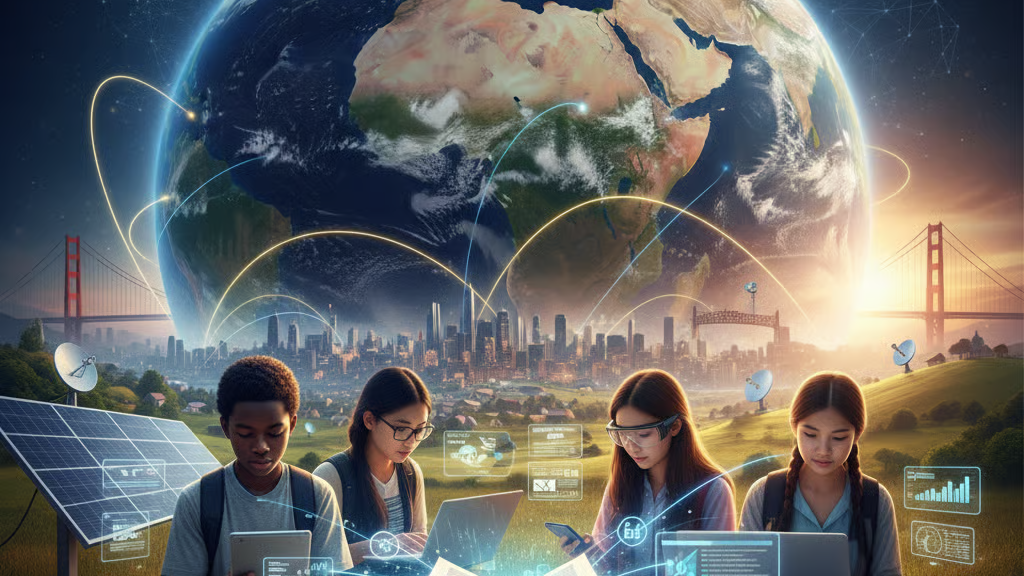
Whenever I deliver a workshop or lecture, I start with, ‘What’s your biggest concern regarding AI?’ I give some choices such as mass layoffs, ethics and deepfakes, expanding the digital divide, bias in the models, dystopia, IP protection, customer data protection, etc. Inevitably, most hands go up on ethics and bias, and almost no hands go up on digital divide.
I disagree. For me, the computing advances since the 1980s have largely benefited those of us that were connected, while the disconnected fell further behind. This isn’t just an African thing. When somebody thought it would be a good idea to close schools at the beginning of Covid, my family in Johannesburg could access the online lessons, while many parts of the state of New Jersey could not.
I also talk about the Copenhagen Consensus finding that if you give a student in a disadvantaged situation a tablet for just an hour per day, their learning outcomes improve by 120% year-on-year, and this was long before the invention of ChatGPT. That’s because students can learn at their own level.
In any event, I believe that today, AI can help close the digital divide, and that high quality education can be ubiquitous to anybody with an Internet connection and a power source, which is getting increasingly prevalent with Starlink and solar.
The most recent revelation is Google’s LearnLM.
“Learn Your Way” is a personalized learning system that rebuilds the same concept around what students and learners care about and how they learn best. Mind maps if you’re visual, audio if you learn by listening, interactive timelines if you like to explore, adaptive quizzes if you want immediate feedback.
Here’s why this matters
🌍 Local context: Physics taught through football, mining, agriculture, or community entrepreneurship - whatever makes sense wherever and how you live.
🗣️ Local languages: Explanations and examples in isiZulu, Sesotho, Afrikaans, Swahili, French, Arabic, and rest. Language matters.
🎓 Local use cases: Technican and vocational students practising real workplace scenarios, Grade 10s learning maths with examples from local markets, or healthcare students revising with community clinic cases.
And the infrastructure shift is here:
📚 The internet is the new textbook. Schools and teachers no longer need to source and distribute static books from the 1990s. And governments can no longer deny education to the underprivileged, as they so often do.
🌐 With reliable connectivity (fibre, mobile data, Starlink), content updates instantly, adapts to each learner, and travels with them on any device.
🧩 Curriculum & assessment change:
👩🏫 Teachers become coaches and curators, not content couriers or paper markers or babysitters.
🧠 Learning materials become dynamic, bilingual/multilingual, and career-relevant.
📝 Assessments become continuous and adaptive, not a once-off event.
🏫 Not just K–12; corporate training, TVET, universities, and professional development can all shift to real-world, role-based examples that actually stick.
⚙️ We’ve been constrained by industrial-age education systems tools. That constraint is gone.
With AI-powered personalisation + ubiquitous connectivity, we can finally teach each student, not the average student. I think this is going to revolutionise education.


I was beyond honored when Shaun Kingston of Leaderex asked the African Academy of AI to be the custodian of Leaderex's first AI Conference. Then I was beyond grateful when Dell Technologies and Intel Corporation agreed to sponsor the event. And what an event it was!
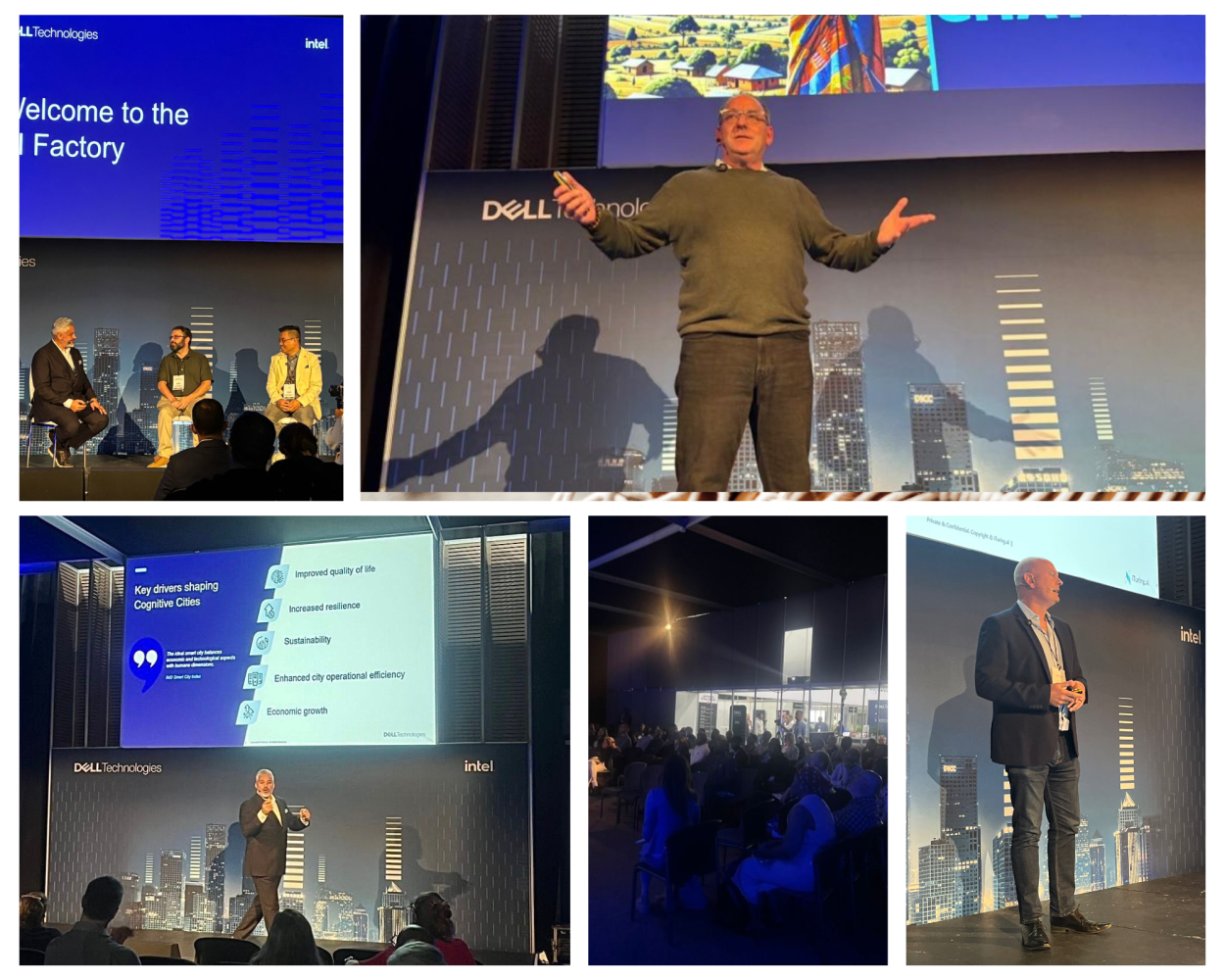
Our conference room sat 130 people, so naturally there were about 200 people in the room for most of the conference 😉 That is thanks to the high caliber of speakers that agreed to deliver talks and participate in panels throughout the day.
The conference was opened by the brilliant Ursula Botha, who generously agreed to MC the whole day. (I had no idea how much work being an MC is!), then Dell's Samer Al Jayyusi, straight off a flight from Dubai, delivered the opening keynote followed by Neil Green of Salesforce, who had just arrived from Ireland.
There isn't enough space in a LinkedIn post to express all the quality I consumed throughout the day, but my friend and broadcasting legend Ray White and his team covered the event and you'll see the highlights on these pages over the coming days and weeks.
There were many highlights, but the most impressive session was Samer moderating a panel with Benjamin Rosman (Time Magazine's Top 100 Most Influential People in AI!) and Prof Jefferson Yu-Jen Chen (TWO PhDs!).
Day 2 of Leaderex 2025 was Marketing Day, with MMA South Africa running the Marketing Technologies conference. Even the afternoon sessions were standing room only, which I didn't see all week. MMA's Sarah Utermark asked my friend and Expert Collaborator Quinton Jacobs and I to run hour-long workshops in the morning, his on AI Essentials and mine on Building AI Implementation Strategies. Both had a capacity of 10 people, so over 20 enthusiastic people packed themselves into the small rooms. It was stuffy but fun!
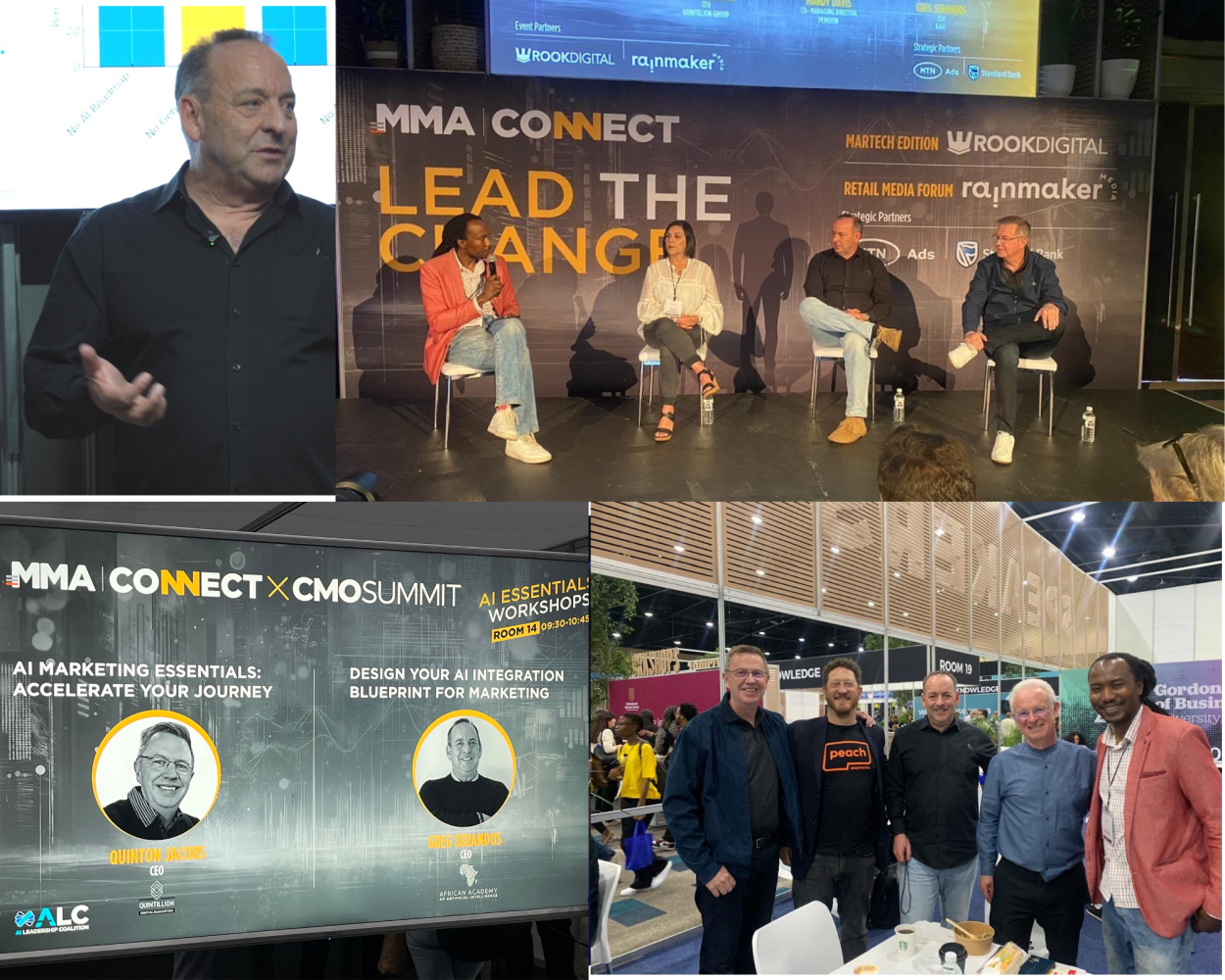
In the afternoon I sat on a panel moderated by my friend KK Diaz and included Mandy Davis and Quinton. That was fun. The Q&A would still be going on if we didn't have a time limit.
But it's the Speakers Lounge where all the action happens. Amongst other legends, we bumped into Arthur Goldstuck and Amazing American Joshua Shimkin. It was a great day and congratulations go out to MMA Global for running such a super event.
I'd like to thank all of the speakers for bringing world-class expertise to the event: Callan Abrahams Maurits Tichelman Monisha Prem Dr Brenda Kubheka, MBChB, MBA, MBE,Nadia Veeran-Patel, Morné Kroukamp, Steve Jump, and Bryan McLachlan. Daniel Collett Andy Appalsamy
There are some surprising - at least to me - results of the biggest ever study of AI usage, published by OpenAI. 70% of usage is personal, and just 30% of business.
Most of that is expected, but the how-do advice surprised me, although I don't know why. My child regularly uses ChatGPT for advice, particularly as they prepare for their new life next week. What should I pack? How do I get around? What do I need when I get there? (A circadian lamp is at the top of the list - guess where they are going?)
Read on - the report is impressive. https://openai.com/index/how-people-are-using-chatgpt/
The African Academy of Artificial Intelligence (AAAI) empowers organizations across Africa to strategically integrate AI into their operations, policies, and products. Through tailored advisory, education, and practical implementation, we guide businesses, governments, and communities towards successful digital transformation. You can email me or book a call by clicking below.
Sausalito AI helps organizations build an actionable AI implementation plan in under three days. We also upskill your teams, providing training on AI tools and Microsoft Copilot, creating measurable results almost instantly. With a proven track record of success, in 2025 alone Sausalito AI helped over 3,000 people advance their AI strategy and skills.
.svg)


.svg)